Analysis: Reservoir Dogs
 |
| Various characters from the Tarantino movies |
As a huge fan of
Tarantino (especially the early-Tarantino) I think the greatest aspect of his
movies is the characters. In addition to the excellent cinematography and smooth
story flow of Tarantino movies, they have deep, consistent, well-written and
developing colourful characters.
And Reservoir
Dogs is the peak for excellence of Tarantino characters.
Therefore, my
analysis of Reservoir Dogs will be through it's characters. I am going to explore the each personality with their paradoxes, which makes them great characters.
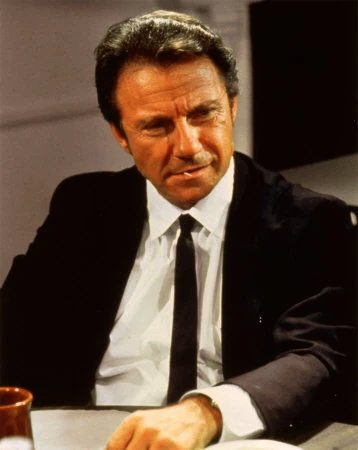
Lawrence 'Larry' Dimick a.k.a. 'Mr. White'
The deleted scene where Larry's background is revealed
Mr. White's an
experienced thief from Milwaukee. It's known that he had done time in prison.
In the deleted
scene (Can be seen below) a lot of information is given about Mr.White's/Larry's background. As told, Larry's a very skillful armed robber, he uses
aliases and had done time in prison. There are more informations in where
Larry's police record is being printed, as in the images below. The other details
are: He prefers using semi-auto Smith & Wesson 9mm, he lost his mother in
his eight, he always carries a back-up pistol that's why he's called 'Two Guns'
and he has aversion to cats.
 |
| Larry's (Mr. White) Criminal Record and Background Information |
So what this part
tells us is, even if Tarantino didn't include these parts in his film, still he
has hearty background for his character, which makes the character great.
Because even if we don't see this part, the actor Harvey Keitel and Tarantino
knew these informations and that probably carried the performance in the movie
to a very high level.
 |
| Larry (Mr. White) in Joe Cabot's office |
During his flashback scene with Joe,
where Larry (Mr. White) gets recruited by Joe Cabot for the robbery, Joe asks
him about a female partner named 'Alabama' (probably related to Alabama in True
Romance within the Tarantino Universe) and Larry replies they split due to
'man-woman thing' after they did four jobs together. In addition, Larry tells
Mr. Pink when they are in the depot that two jobs before, they discovered one
of the team was a cop and therefore after when Joe's robbery also got messed
up, Larry starts believing he is 'jinxed'.
 |
| Harvey Keitel during the set of the breakfast scene |
To talk about
Larry's personality traits: Above all, Larry is a strong figure. He has teeth
amongst the robbery crew. Still, his power doesn't come from his swagger or
being bully. Instead, it's based on Larry's fatherliness and charisma.
Apart from these, Larry has some balls and he is definitely a stand-up guy. And
again, this toughness isn't inclined to psychopathy or triger-happiness (At
least that's what he says during his dialogue with Mr. Pink about Mr. Blonde's
psychopathy). With his own words, Larry drops down only those who are standing
in his way, so this makes him a career criminal still with code.
 |
| Larry is shooting at incoming patrol car, killing the two cops in it |
Even though Larry
knows what takes to be a professional, nevertheless he is not a guy that can
control his emotions to a certain extent. That's where comes Larry's emotional
side. He is so dependent on his momentary emotion swings that he can stick a
gun in the faces of his long time friends and cooperators Joe Cabot and his son Nice Guy
Eddie Cabot, for sake of the guy he had met only for a week, Mr. Orange (Tim Roth). With
whom, Larry has a relationship suchlike one between father and son, older and
younger brothers or gay lovers. His confrontation with Joe and Eddie for Mr.
Orange also shows Larry's boldness for pursuing his own truths, as well as his
sensational personality.
So Larry's a man
that can handle himself. He can act very cold-bloodedly as occasions requires,
knows what to do and how to handle a situation he is facing (Remember how he
motivated Mr. Orange when he was shot, how he riddled the incoming cops with
holes or when he did not give a single shit about Mr. Blonde's (Michael Madsen)
bad-assness and called him to account for his actions without hesitation).
Mr. White - Mr. Blonde Confrontation
 |
| Mr. White listening Joe's briefing for the job |
Here Larry's paradox shows up: Even if Larry
knows what takes to be a professional, still makes very fatal mistakes during
the story. Before the robbery, in the depot while Joe gives his last
instructions for the job, he makes it clear:
"With the exception of Eddie and myself, who you already know, we're
gonna be using aliases on this job. Under no circumstances do we want any one
of you to relate to each other by your Christian names. And I don't want any
talk about yourself personally. That includes where you been, your wife's name,
where you might've done time or a bank maybe you robbed in St.
Petersburg." - Joe Cabot
And a
career-criminal and professional armed robber as Larry simply gives out to Mr.
Orange (Tim Roth) that his first name is Larry and he's from Milwaukee, he bets
for the team of Milwaukee which gives Mr. Orange the idea Larry's fan of the
team and therefore gives him where might Larry is actually from. These
informations had already enabled the police team backing Mr. Orange to sort out
who's Larry indeed and his background etc (remember the meeting between Mr.
Orange and his cop friend in a hamburger restaurant).
 |
| The scene where the undercover cop Mr. Orange (Freddy Newandyke) conveys the information he got from Mr. White to Detective Holdaway |
When he is asked
by Mr. Pink, Larry says the reason for revealing his first name to Mr. Orange
is because he was shot. So this shows even if Larry kills cops without blinking
an eye which makes him look like a complete merciless killer, yet he's a very
caring indeed that he doesn't hesitate insisting on Mr. Pink and Eddie for taking
Mr. Orange to a hospital.
 |
| Larry is taking care of bleeding Mr. Orange |
All these point
out Larry's a very human character with his strengths and weaknesses or ups and
downs, which's a hard thing to achieve in fiction, to create a natural
character not by making it dull or flat.
 |
| The scene where Larry instructs Mr. Orange |
Larry's task
during the robbery is to take the manager with Mr. Pink during the robbery and
make him give the diamonds to himself and Mr. Pink. As Larry instructs Mr.
Orange about how to handle a manager thinks he is Charles Bronson, it turns out
this part of robberies is Larry's profession and he is experienced about crowd
control and possible hostage behaviours.
About Larry's
value system: to him, it is not a wrong thing to kill the cops who are chasing
him, or it isn't problematic for Larry pointing a gun at two old friends for
thinking they are wrong. He is aware of he supposed to be a professional, yet
his compassionate and responsible personality, also with his sentimentality,
don't allow Larry to fit the description 'professional'.
Speaking against
Mr. Pink on tipping and it's importance for waitresses is another point shows
Larry's sensitive part.
 |
| Larry (Left) and Mr. Orange (Right) in the breakfast scene |
There are many
details in the breakfast scene about the point Larry stands amongst the crew.
If wee look closely, the other members of the group are mostly framed lonely in
the breakfast scene, while Larry (Mr. White) is always seen in the same frame
with Mr. Orange. This detail tells two things: One, they are close. Two, Larry
is sitting bossy, relaxedly, while Mr. Orange's position is more timid and
passive, which both tells about their relationship and their positions within
Joe's group.
 |
| Joe (Left), Larry (Middle) and Mr. Orange (Right) |
Larry is also the
only Reservoir Dog sitting so close to Joe Cabot. This is another detail
about Larry's being the strongest character with Joe Cabot, or at least he is
the beta wolf if Joe's the alpha. Larry is the only character can mock Joe
Cabot (Joe's notebook argument and 'Toby' joke) which is a hard thing to do
for the other members of the team. Even if Joe wants the notebook back, Larry
first refuses him and then, gives the notebook yet after a while, which tells
Larry is the second authority after Joe Cabot and he is the only Reservoir Dog
that can oppose Joe Cabot.
 |
| Larry (right), Joe Cabot (middle) and Nice Guy Eddie Cabot (right) are in a nightclub, they are listening Mr. Orange's story |
Flashbacks tell
about Larry and Cabot Family relationship, as seen while Mr. Orange is telling
his 'fake story about dealing marijuana' in the nightclub (possibly owned by
Cabots). There, we can see Larry is with Joe Cabot and Eddie Cabot, listening to Mr. Orange as them and sharing the same table and position. Another detail, Larry's sitting beside Nice Guy Eddie and is very comfortable in Eddie's car while Eddie drives them to the depot for Joe Cabot's instructions. Thus we can
understand he is quite close with Cabots.
Mr. Pink - The Only Dog Who Knows How To Act Like a
'Professional'
 |
| Mr. Pink points his gun at Mr. White |
"I known Joe since I was a kid." tells
Mr. Pink to Mr. White while they were discussing about who set them up.
Therefore, their relationship have to be going back many years. And as we have
seen in the tipping argument Mr. Pink is a one piece of a nitpicky, rogatory,
finicking and hard-to-convince character.
 |
| Mr. White (left) and Mr. Pink (right) discussing the set up |
Mr. Pink is the
first one talks about there is a set up. Furthermore, while thinking about how
the things got messed, Mr. Pink tells most of the details about what happened
during the robbery and corrects Mr. White's memory about it. Mr. White believes
the cops showed up at the moment that alarm went off, but Mr. Pink is pretty
sure that the cops showed up not before Mr. Blonde (Michael Madsen) started his
shooting spree.
"The cops didn't show up after the alarm went
off. They didn't show till after Mr. Blonde started shooting everyone." - Mr. Pink
This is one clue about Mr. Pink's
meticulous character, he remembers every incident in details. Another aspect of
Mr. Pink is he is a rule-bound personality who believes it's best to stick up
for the rules, as he refuses to hear Mr.White's real name nor wants to tell his
own. Because Mr. Pink is always suspicious about almost everyone, that's why
he's never so relaxed or cool during the depot period and doesn't want to trust
anyone hundred percent.
 |
| Mr. Pink (right) with Mr. Orange (left) in Nice Guy Eddie's car |
About his past experiences, Mr. Pink
tells once he worked with 'niggers' as he describes and puts forward that they
talk about killing each other all the time during these jobs. Also, Mr. Pink
tells after the alarm went off, the average response time by the cops is four
minutes, another detail gives Mr. Pink had been to robberies before. This is a strongest
clue in Mr. Pink's mind that one of them was a rat.
"Okay, when an alarm goes off, you got an
average of four minutes response time.
Unless a patrol car is cruising that street, at that particular moment,
you got four minutes before they can realistically respond." - Mr. Pink
 |
| Mr. Pink, smoking in the toilet of the depot |
Mr. Pink is the
one that could grab the bag full of items and bring it to the depot, so he had
done the most important part of the job and even if he didn't trust in the plan
anymore, still he made it to the depot with the bag instead of just getting
lost.
So considering all of these, it appears
like Mr. Pink is the closest Reservoir Dog to acting like a professional. However,
Mr. Pink has a very big paradox about this. Which is nothing but his lack of
self-confidence. Even if he knows how to act like a professional, he doesn't
have any balls to execute this knowledge.
This means, Mr. Pink gets overwhelmed by
the authorities of the other characters. Even if he knows what's the most
reasonable to do, what's the surest way to handle the situation, he is always
the compromising side during his conflicts with the others. Like when he is
sure there is a set up and the best to do is just to take off, he obeys what
Mr. Blonde says and stays in the depot. Or he tells Mr. White that because of
his psychopathy, he thought shooting Mr. Blonde but when Mr. Blonde arrives at
the depot, Mr. Pink changes his tune and says Mr. Blonde is the only one he is
hundred-percent positive about. (See the video Mr. White vs. Mr. Blonde Confrontation in Mr. White part)
"Right now, Mr. Blonde is the only one I completely trust. He's too fuckin homicidal to be workin' with the cops." - Mr. Pink
 |
| Mr. Pink (middle) acts the peacemaker between Mr. White and Mr. Blonde |
Bu if you'd ask
me, Mr. Pink's ideas about Mr. Blonde are changed because of both this evidence
and his fear of Mr. Blonde. Because there isn't any solid reason for Mr. Pink
to stay in the depot while he's aware the robbery was set up, it's only his
lack of self-confidence and Mr. Blonde's persistence about strictly following
Joe's plan.
In the end of the movie, it's audible
when Mr. Pink runs out after the Mexican standoff, the cops shout and then a
shootout begins. This tells what happened to Mr. Pink after he left the depot
-to me he is dead. This is because that was %100 the plan of the cops and as
Mr. Orange (Freddy Newandyke) says to the hostage cop (Marvin Nash), the cops would show up
and seize the robbers not until Joe Cabot's appearance in the depot. So Joe was
there and the cops were ready, Mr. Pink wouldn't survive that if you'd ask me (but still, who knows ...).
So this is his paradox. Mr. Pink knew the rightest thing to do was leaving
the depot, Mr. White also believed that and he was ready to go. But on Mr.
Blonde's insistence and Mr. Pink's concerns about not following Joe Cabot's
plan brought his own destruction.
Comparing him with Mr. White, I can tell
these two complete one another in those aspects. Even if Mr. Pink was more
rational and reasonable than Mr. White (Larry) he is not brave as Mr. White to
execute his rational decisions.
 |
| Mr. Pink is running away from the cops |
But this cowardice of Mr. Pink that I am
speaking of is more of moral courage. Because Mr. Pink is bold enough to shoot
his way out against the cops chasing him or he doesn't hesitate fighting Mr.
White.
Mr. Pink shoots his escape route out, fights the cops
So Mr. Pink has courage for battling or fighting in action, but his
cowardice shows up during personal relations and power balances within people.
He can't oppose the authority. That's why both Joe Cabot and Mr. Blonde easily maintained authority on Mr. Pink.
 |
| Mr. Pink is shooting the cops chasing him |
 |
| Mr. Pink, shooting at the cops |
Mr. Pink's position in the breakfast
scene is against Mr. White; which gives the clue that the two will argue in the
following period. Mr. Pink strongly opposes paying tip, but when Joe Cabot
straightly commands him to do so, Mr. Pink doesn't insist anymore, unlike Larry
(Mr. White) who -even if jokingly- refused to give the notebook back to Joe.
Nice Guy Eddie grabs him by the back of his neck, another clue Cabot Family has
authority over Mr. Pink.
 |
Mr. Pink uses the metaphor 'the world's smallest violin' to describe
what is tip for waitresses |
Another example of moral cowardice shown
by Mr. Pink is when Joe Cabot gives the nicknames. Yes, Mr. Pink is probably
the softest nickname given to any armed robber so naturally Mr. Pink objects
but when Joe Cabot tells "My way or the highway" Mr. Pink easily
comes around.
The nicknames scene - Mr. Pink argues with Joe over his nickname
This point is a paradox for a
professional. This is just a robbery along a day, the nicknames are not big
deal. But our Mr. Pink who's so determined about 'acting like a pro' makes a
big problem out of his nickname and objects almost childishly.
So these are Mr. Pink's dilemmas, as he
is just a human with a lot of paradoxes and inconsistence with some strong
personal attributes. That's why Mr. Pink is a great character.
 |
| Mr. Pink during Joe Cabot's instructions for the heist |
Finally, his role during the robbery is to take
the manager with Mr. White and make him give up the diamonds.
Mr. Blonde a.k.a. 'Toothpick' Vic Vega - 'A stone-cold psycho'
 |
| Vic Vega a.k.a. Mr. Blonde |
Unlike the rest of the reservoir dogs, Mr. Blonde is not just a hired thief. He is one of the soldiers of Joe Cabot's criminal organisation.
"Dad, I got an idea. Just hear me out. I know you don't like usin' the boys on these jobs ..." - Nice Guy Eddie
So, Mr. Blonde (Vic Vega) is a gangster that officially belongs to the Cabot Family mob. This detail allows suspicion if Vic Vega is an experienced thief as Mr. Pink or Mr. White is, or might he had been a foot soldier e.g. a debt collector for all of his criminal past.
As Nice Guy Eddie explains to Mr. Orange, Vic Vega was arrested during a police raid on a depot full of stolen items, owned by Joe Cabot. Then Vic Vega has done four years in prison without mentioning Joe's name to get his sentence reduced, as it was offered to him according to Nice Guy Eddie's quote:
"... in four years, never made a deal, no matter what they offered him ..."
Nice Guy Eddie talks about Mr. Blonde after Blonde gets killed by Mr. Orange
About the depth of the character, from the beginning Mr. Blonde is an excessively cold-blooded man whose eyes are glaring with anger at life behind his calm expression. Probably Vic Vega owes this anger to his four years wasted behind the bars or might it is just Vega's nature. However, it is obvious that Vic Vega is very close to both Eddie and Joe Cabot.
 |
| Vic Vega visits Joe Cabot's office right after his release |
Right after his release from the can, Vic tells Joe: "I want you to know I appreciate all the packages you sent me on the inside." This reveals Vic's gratitude for Joe who had been taking care of him while Vic was in jail, rather than just forgetting about him.
Now Vega is out and he has got a problem: his parole officer Seymour Scagnetti, a real pain-in-the-ass type of a guy (Scagnetti was portrayed by Tom Sizemore in True Romance 1993, as the script was written by Tarantino). So to get Scagnetti off his back, Vic Vega needs a no-show job and Nice Guy Eddie tells him they can set him to the docks, at which Vic Vega responds furiously by stating he doesn't want to lift any crates.
This hint gives Vic Vega has no patience left. He doesn't like the idea of becoming a regular worker and obeying to the chain of command. This is parallel to Vic Vega's reaction to Marvin Nash, as he slaps Nash when Nash mentions Nice Guy Eddie as 'your boss'. Vega tells him he doesn't have a boss. Then what's Joe to him ?
The part where Mr. Blonde slaps the cop and tells him he doesn't have a boss
Certainly Vega has got problems with authority. He refuses the idea of having a boss, yet he obeys Joe and does as Joe tells, this is being his biggest dilemma.
 |
| Nice Guy Eddie and Vic Vega are wrestling in Joe's office |
Another thing about Vega: There is an intense bond between him and Eddie, loosely similar to the one between Mr. White and Mr. Orange. Vic and Eddie can go to extremes in the matter of adult and practical jokes. This extremes can cross the line so much they dare to wrestle inside the office of a bossy man like Joe Cabot. What's more, the heist needs to be taken care of by the guys who are not labelled as Joe's own soldiers. Joe and
Eddie know this rule, still they easily add Vic Vega to the heist plan, relying
on Vic Vega more than anything.
 |
| Mr. Blonde, mockingly shoots Mr. White |
Later on, irony of fate shows herself:
Mr. Blonde, their most trusted man, becomes the main Reservoir Dog who screws
up (apart from the fact Mr. Orange is a cop). Owing completely to his
psychopathy the robbery turns into a blood bath. According to the dialogues in
the depot, the checkout girl (in her twenties) pushed to the button and turned
the alarm on in despite of Mr. Blonde's warning, herein Mr. Blonde goes on the
shooting rampage, killing the checkout girl with other possible victims. This
incident underlines Mr. Blonde's problem with being a boss and authority:
"I told 'em not to touch the fuckin' alarm,
they did. If they hadn't have done what I told 'em not to do, they'd still be
alive."
- Mr. Blonde explains his shooting spree.
Mr. Blonde makes his way out of the
police ambush by taking a police officer as an hostage. But he doesn't hesitate
buying hamburger, fries and soda while there is a hostage in the trunk of his
car, highlights a character that is extremely reckless, excessively calm and
certainly unpredictable. He tortures a police officer only for fun, even wants
to burn the man, thus probably would burn out the depot too. Even if it's an
irritating idea that torturing someone for fun, but the idea of starting a fire
is a clue of Mr. Blonde's carelessness. Residents or police could notice such fire
and the depot would definitely become an obvious target.
Here comes another paradox. Let's forget
Mr. Orange was a cop, wouldn't a reasonable thief shoot Mr. Blonde, a man that
was about to start a fire ? But what's Nice Guy Eddie's reaction ? He directly
blames Mr. Orange and states Mr. Blonde was a hundred percent trustworthy guy. Eddie never doubts the loyalty of Mr. Blonde, yet Mr. Blonde is one of the
main reasons this heist had terribly gone wrong. And if he'd burn the cop, the
story would probably have a disastrous ending (Yes it still has).
 |
| Mr. Blonde listening to Joe's instructions |
My conclusion about Mr. Blonde is that
he indeed hates the Cabot Family and holds them responsible for his wasted four
years. According to his recklessness, his anger towards the idea of 'having a
boss', his mood of giving commands, his looking over his shoulder at the other
Reservoir Dogs ... These details are telling Mr. Blonde has a huge
problem with authority, this includes the Cabot Family, but out of thankfulness
and maybe even his fear, Mr. Blonde couldn't take a stand against the Cabots and
instead took revenge on everybody else he encountered.
Couple of trivia infos: Mr. Blonde is the only Reservoir Dog in the depot that doesn't have any on-screen killings despite of his sadism. And the name 'Vic Vega' related to Tarantino's idea that in the Tarantino world he can be a twin brother to Vincent Vega (John Travolta) of Pulp Fiction.
During the breakfast, he mocks Mr. White and sits against him, shows the two will have arguments, also Mr. Blonde is almost isolated from the rest of the main characters.
His role during the robbery was to
control the crowd with Mr. Blue.
Freddy Newandyke a.k.a. Mr. Orange
 |
| Mr. Orange motivates himself before getting in Eddie's car |
Our lovely undercover cop. He is the
most law-abiding character of the movie. The cop part of him, meaning Freddy,
seems like an ambitious policeman. He takes a risk that other cops consider as
madness and becomes undercover. First he gets close to Nice Guy Eddie via an
informant. Freddy shows sempathy for this informant guy but his colleague
Detective Holdaway reminds him the informant guy is just another asshole who
sells his friends out. Then Freddy changes his attitude accordingly.
Freddy is a wise and cold-blooded guy.
He is very good at what he does and pulls out the role of Mr. Orange very well.
He summarises and puts on an act of the four pages of the fake story of
marijuana trade in front of Joe, Eddie and Mr. White, and he manages to impress
them all, shows Freddy is quite skilled, confident man with some balls.
Freddy (Mr. Orange) summarises and tells the marijuana story to get accepted by Cabots
 |
| Tim Roth during the set of the breakfast scene |
To talk about the other part of his
personality, Mr. Orange: in the beginning (The breakfast and in Eddie's car
before Joe's instructions) Mr. Orange is pretty shy. He is in the mood of
obedient rookie, as in the position of Mr. White's young disciple.
In the breakfast scene he sits next to
Mr. White, as a silent listener who mostly agrees with Mr. White's opinions. On
Mr. Pink's tipping speech, Mr. Orange gets convinced and attempts to take his
money back, but gets stopped by Nice Guy Eddie who tells him to "Leave the
dollars there." Then, Mr. Orange simply steps back, doesn't argue and
leans back.
There is a very excellent detail in
Reservoir Dogs which reveals the fact Mr. Orange is the rat: it's when Joe
Cabot comes back to the table after paying the bill. Joe asks who didn't throw
in and it's Mr. Orange that tips off it's Mr. Pink. A sign of ratting out a
friend.
 |
| Mr. Orange watches Mr. White shooting at the policemen |
His face expressions while Mr. White
shoots at the windshield of the police car tells about his true feelings at the
moment. It's indeed madness to go undercover. Besides, out of the blue he gets
shot by one of those 'law-abiding innocent citizens' that he wants to protect.
Reflexively Mr. Orange shoots back and kills the woman who shot him, the woman
with an infant car seat in her backseat.
 |
| Mr. Orange, right after shooting the woman who shot him in the belly |
So here comes the breaking point of his
character, his paradox. Freddy Newandyke wants to stop crime and risks his life
by going undercover, yet in the end Freddy himself truly becomes Mr. Orange, a
criminal who killed an innocent person. He really loves Larry (Mr. White) and
becomes close friends with him. Furthermore, Mr. Orange really starts learning
from Mr. White about life of crime.
But no matter what, we know Freddy
remained loyal to his duty till the end and tried to sustain his goal of
getting the whole robbery team arrested to secure the justice. He shot Mr. Blonde instead of letting him kill the cop even if this didn't do any good for Mr. Orange, yet he rather risked his own life to save the cop, Marvin Nash.
 |
| Mr. Orange, holding the hand of Mr. White (Larry) who's bringing him to the depot |
After finding out Mr. Orange is a cop,
one could think the relationship between him and Larry was fake. Actually, it
will remain as an obscurity to what extent their relationship was real, but
this bond between two men gets thicker and thicker when Larry helps out
bleeding Mr. Orange, motivates him along the road to the depot and tries to
make sure Mr. Orange will receive a medical treatment.
The greatest breaking point of the film
comes in the end. Mr. Orange knew that the cops were about to raid on the depot
and Mr. White would get arrested. He knew Mr. White killed his two close
friends and associates to protect him. Now only thing Mr. Orange should do is
to remain cool and wait for at most a minute for the cops to get in. But Mr.
Orange couldn't ignore his debt of gratitude for Mr. White and gives up he is a
cop. Mr. Orange gives it up at the cost of his own life.
 |
| Mr. Orange listening to Joe's instructions in the depot |
At this moment, a hurricane of chaos
devastates Mr. Orange's mind: his duty, his will for securing the justice gets
bested by his gratitude, loyalty and love for Mr. White (Larry).
His role in the heist was to stand
outside and guard the door not to let anybody go in our out.
'Nice
Guy Eddie' Cabot
 |
| Nice Guy Eddie during Joe's instructions in the depot |
Eddie the son of the boss. Nice Gu Ed.
The guy who promises a potential for running his father's organisation one day,
at least appears so. Eddie is close to Vic Vega. And he is also intimate with
Larry (Mr. White), to whom he respects for Larry's relationship with his father
Joe. Not as much as Joe, but still Eddie has some kind of authority over
the Reservoir Dogs, as he dominates the conversation during the breakfast
scene. But Eddie has a bad temper which causes him troubles during times of
crisis (see the video in Mr. Orange section where Eddie talks about Mr. Blonde)
Nice Guy Eddie tells a funny story to Mr. White, Pink and Orange
Mostly, he is an outgoing personality.
With regard to the story of Elois he tells to Mr. White, Orange and Pink, Eddie
is pretty humorous yet he goes bananas when appropriate. But one thing Eddie
lacks is compassion. He doesn't hesitate shooting Marvin Nash who he didn't
know anything about. However, Eddie knows to calm down as he easily gets upset.
Remember when he warns Mr. White:
"Larry,
we have been friends. You respect my dad and I respect you... but I'll put
bullets in you. You put that fuckin' gun down now. " -
Eddie warns Mr. White
Also he tells Mr. White:
"Larry, look. It's been quite a long time. A lot of jobs. There's no
need for this, man. Let's just put our guns down... and let's settle this...
with a fucking conversation."
 |
| Nice Guy Eddie is upset for the robbery being screwed up |
His quotes show Eddie's calm side.
Although Eddie has a bad temper, yet he doesn't turn his back to negotiation.
Eddie is not reckless as his sidekick Mr. Blonde, but he is almost as
unscrupulous as Mr. Blonde. In addition, loyalty is important for Nice Guy
Eddie, thus his reaction for Mr. Blonde's death could be understood in this
case.
Eddie is pissed off when he arrives at
the depot. On Larry's insists, Eddie says he will try to set a doctor to take
care of Mr. Orange. So even if he's not so compassionate, he has got somehow a
sense of responsibility. And before the depot, Mr. Blonde is the only person
Nice Guy Eddie personally talked to (as Mr. Blonde mentions to Pink and White).
At the depot, Nice Guy Eddie tells the crew need to remove the cars in front of
the depot not to add to Joe's anger. This detail tells satisfying his fathers
demands is Eddie's first priority.
 |
| Eddie drives the crew to the depot for Joe's instructions |
Eddie however, remains indifferent to
the warnings from the others (Mr. White and Mr. Pink) about Mr. Blonde's
psychopathic behavior and leaves the depot to the craziest member of the crew, Mr. Blonde while removing the cars with White and Pink. So considering
this, Eddie could be held responsible for messing things up in the post-robbery
part of the job as relying on Mr. Blonde too much no matter what the others
tell about him.
And remember: Eddie was the reason Mr.
Blonde had got involved in the job from the beginning.
 |
| Nice Guy Eddie in the breakfast scene |
Another detail: his sidekick Mr. Blonde
comes out of the jail and Eddie doesn't go there to welcome him. And Eddie's
excuse is he was busy. The picture might give the superior-subordinate
relationship between two even if they are buddies. So this can also tell about
Mr. Blonde's hatred and fury, might he wanted to take the place of Eddie and to
become Joe's son.
Joe
Cabot
 |
| Nice Guy Eddie (left), Joe Cabot (middle) and Mr. Blonde (right) in Joe's office |
Joe is a cool guy with a sense of humour
yet when it comes to business, Joe turns a drill instructor. The story he tells
during his introductions for the robbery summarises Joe's concerns about
heists:
"Five guys sittin' in a bullpen...San
Quentin... wonderin' how the fuck
they got there. "What did we do wrong? What
shouldn't we have done?
It's your fault, his fault--"All that
bullshit. Finally somebody says... "Wait a minute. While we were planning
this caper... we just sat around
tellin' fuckin' jokes. Got the message?"
 |
| Joe instructs the crew for the heist, giving the nicknames |
Here comes Joe Cabot's paradox: along
the heist, his crew had always been telling jokes but nothing else. Remember
Eddie's Elois story, the breakfast scene and Madonna, Mr. Orange's marijuana
story (even if it's on a purpose for the cops). This is Joe Cabot's paradox, he
knows these jokes will bring their destruction but can't avoid his crew doing
the very same mistake.
There are more to add Joe Cabot's
mistakes. First, he allows Mr. Orange into the business, a guy he doesn't know
at all. Second, he allows Mr. Blonde in, a guy that's just out of prison (under
the surveillance of the police), a guy without much robbery experiences as Mr.
White or Mr. Pink have. Third and the most obvious: the robbery turns to Vietnam,
Joe senses Mr. Orange is a rat but still Joe comes to the depot. Yet, we know
Joe's careful and focused. That's Joe's paradox.
 |
| Joe is about to shoot Mr. Orange for being the rat |
Despite his old age and experience in
crime, Joe does very obvious mistakes such as the ones mentioned. Probably the
motivation behind Joe's decision to go to the depot was to kill Mr. Orange.
Herein Joe gets defeated by his passion for revenge maybe. He felt away from
professionalism and he ended up overwhelmed by the avalanche of the mistakes he
had been doing from the beginning.
Marvin
Nash
 |
| Marvin Nash (the police hostage) in the trunk of Mr. Blonde's Cadillac, with the gasoline |
 |
| Marvin gets tortured by Mr. Blonde |
A 'blue boy'. Marvin is a police officer
in uniform. Albeit the brutal torture he exposed to, Marvin kept his mouth shut
and didn't give Mr. Orange in (A reminder: Marvin tells Mr. Orange's name when
Orange asks 'Freddy something ..." and tells Mr. Orange that they were
introduced to each other five months ago). He was a minor character, one with
courage.
Mr. Blue
 |
| Mr. Blue during Joe's instruction |
All we know what
happened to Mr. Blue after the robbery is what Joe told about him, "Dead
as Dillinger." He was the oldest of the six Reservoir Dogs, probably the
most experienced too. The most significant detail about him, he tuned out from
Madonna after "Papa, Don't preach," phase. As we understand from the fact only Joe knew Mr. Blue was dead, Joe had been watching the whole thing
during the robbery. And who knows how would be his attitude if he could make it
to the depot.
For the heist, he
was tasked with crowd control, as Mr. Blonde was.
 |
| Mr. Blue in the breakfast scene |
Mr. Brown
 |
| Mr. Brown tells his ideas about Madonna's 'Like a Virgin' |
He is a fierce
chatter whose jokes has many details and even with some philosophical
approaches to them.
He was to wait in
the car until Mr. Orange's signal, then he'd pull up in front of the store.
Conclusion
Personally, these
aspects and more of what the movie consists are the reason I believe Reservoir
Dogs is one of the best movies ever made. Of course this idea of mine has got
something to do with the fact I watched Reservoir Dogs for the first time in my
early teens. So this film has huge influence on me.
Reservoir Dogs is
one of the main reasons that I love cinema that much, I love dialogues and
character development so much as well.
And Harvet
Keitel's Mr. White has been a role model for me in my early teens. The most of
the fans love either Mr. Blonde or Mr. Pink but I always go with Mr. White, who
I believe is the main reason Reservoir Dogs is such an epic movie. Because
Larry (Mr. White) is the center of the humanistic struggle during the process
of the whole film.
Deniz Taylan
Sağır
12 April 2016